Why Knot Strength Matters More Than Line Strength
Many anglers focus on buying strong fishing line. But the truth is, your knot strength often matters more. Even the toughest line can break if your knot is weak. Most line failures happen at the knot, not along the line itself. A poorly tied knot can reduce line strength by half. So, learning how to tie the strongest fishing knot is the secret to keeping your catch.
Knots are not just about connecting a hook. They help transfer force, avoid slipping, and prevent breakage during sudden pulls. If you want to land bigger fish or avoid losing them at the last second, understanding knot strength is essential.
Knot Strength Explained (break Strength Percentage)
Knot strength is measured as a percentage of the line’s original strength. For example, if you use a 10-pound line, and a knot reduces the strength to 8 pounds, the knot’s strength is 80%. Most knots do not retain 100% of the line strength.
A knot’s break strength percentage depends on:
- How the knot spreads force
- How tightly the coils hold
- Friction and slippage
- The type of line used
Some knots, like the Palomar, keep almost all the line strength. Others, like the simple overhand knot, can cut strength by more than 50%. That’s why choosing the right knot is crucial.
Ranked Table — Strongest Fishing Knots
Below is a comparison of the most trusted fishing knots. These are ranked by their average break strength percentage and their best use.
| Knot Name | Strength % | Best Use | Line Type |
|---|---|---|---|
| Palomar Knot | 95%+ | Hooks, lures, snaps | Mono, braid, fluoro |
| Uni Knot | 90% | General, leader, terminal | Mono, braid, fluoro |
| Improved Clinch Knot | 85% | Hooks, lures | Mono, fluoro |
| San Diego Jam Knot | 87% | Heavy tackle | Mono, fluoro |
| Double Uni Knot | 80% | Joining lines | Mono, braid, fluoro |
| FG Knot | 90% | Leader to braid | Braid to fluoro |
| Surgeon’s Knot | 80% | Joining lines | Mono, fluoro |
Most anglers use the top three for everyday fishing. But the best knot also depends on the line type and the fishing situation.
1 Strongest — Palomar Knot (95%+)
The Palomar knot is famous for being the strongest and simplest knot. It keeps over 95% of the line’s strength, which means your line almost never breaks at the knot.
How to tie:
- Double the line and pass through the eye.
- Tie a loose overhand knot.
- Pass the hook or lure through the loop.
- Pull on both ends to tighten.
Tips:
- Wet the knot before tightening.
- Make sure both strands lay flat and do not cross.
- Works best with mono, braid, and fluorocarbon.
Many tests, including those from IGFA, show the Palomar knot beats most others in holding power. Even beginners can learn it fast.
2 — Uni Knot (90%)
The Uni knot is very strong and flexible. It holds about 90% of the line strength. It is easy to tie and works well for connecting hooks, lures, or even joining lines.
How to tie:
- Thread line through the eye.
- Form a loop and wrap the tag end around the main line and loop 4-6 times.
- Pull the tag end to tighten the wraps.
- Slide knot down to the eye and pull both ends.
Tips:
- Adjust wraps for thicker line.
- Wet before pulling tight.
The Uni knot’s strength comes from its multiple wraps, which spread force and reduce slippage.

Credit: kastking.com
3 — Improved Clinch Knot (85%)
The Improved clinch knot is a favorite for tying hooks and lures. It holds about 85% of the line’s strength. Many anglers use it for mono and fluorocarbon.
How to tie:
- Thread line through the eye.
- Wrap the tag end around the main line 5-7 times.
- Pass the tag end through the small loop near the eye.
- Pass it again through the big loop.
- Pull tight and trim excess.
Tips:
- More wraps for thinner line.
- Wet the knot before tightening.
The improved clinch is easy but can slip with braided lines. For braid, use more wraps or choose another knot.
Strongest Knot For Braided Line
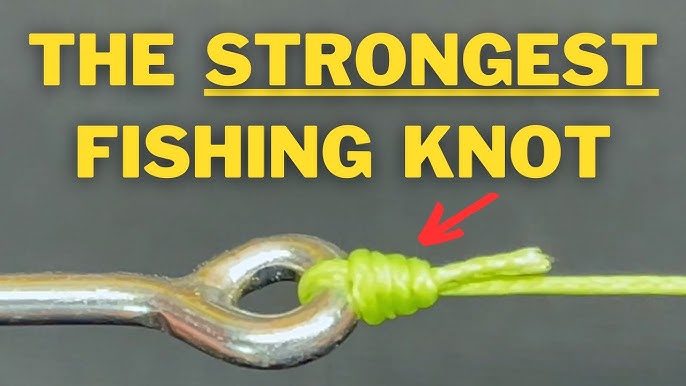
Braided line is slippery. Not all knots work well with it. The Palomar knot is the best for braid, keeping nearly all the line strength. But for joining braid to leader, many anglers use the FG knot.
| Knot | Strength % (Braid) | Best Use |
|---|---|---|
| Palomar | 95%+ | Hooks, lures, snaps |
| FG Knot | 90% | Leader connection |
| Double Uni Knot | 80% | Joining braid to mono/fluoro |
Non-obvious tip: Always use extra wraps with braid. This prevents slipping and gives more holding power.
Credit: www.youtube.com
Strongest Knot For Fluorocarbon
Fluorocarbon is stiff and can be hard to tie. Knots like San Diego Jam and Palomar work best. The Uni knot is also reliable but needs more wraps.
| Knot | Strength % (Fluoro) | Best Use |
|---|---|---|
| San Diego Jam | 87% | Heavy tackle |
| Palomar | 95%+ | Hooks, lures |
| Improved Clinch | 85% | Hooks, lures |
Practical insight: Wetting fluorocarbon before tightening is crucial. Dry knots can weaken the line and drop strength by 10% or more.
Strongest Knot For Monofilament
Mono is flexible and easier to tie. The Improved clinch knot and Palomar knot are top choices. Both keep high strength and are simple to tie.
Common mistake: Pulling knots too tight without wetting can burn and weaken mono. Always moisten before cinching.
Does Knot Tying Technique Affect Strength?
Absolutely. Even the best knot can fail if tied poorly. The main factors are:
- Proper tightening: If you don’t pull evenly, the knot may slip.
- Wet the knot: Friction can weaken the line.
- No overlapping coils: Coils should lay flat.
A study by fishing researchers found that bad technique can drop knot strength by 30%. Practice is as important as the knot itself.
Non-obvious insight: Some lines, especially braid, need more wraps for security. Experiment with wrap numbers to find the strongest setup for your line.
Frequently Asked Questions
What Is The Strongest Fishing Knot Overall?
The Palomar knot is widely tested as the strongest, keeping over 95% of line strength.
How Much Strength Do Knots Lose?
Most knots lose 10–20% of the line strength. Poorly tied knots or wrong knot choice can cut strength by 50%.
Which Knot Is Best For Joining Two Lines?
The FG knot and Double Uni knot are best for joining braid to leader. They balance strength and slimness.
Does Knot Strength Change With Line Type?
Yes. Some knots perform better with mono, braid, or fluorocarbon. Always match your knot to the line type.
Is Knot Lubricant Necessary?
Lubricating with water or saliva before tightening prevents friction and protects line strength.
Landing big fish starts with a strong knot. Mastering the Palomar and other top knots can make the difference between success and heartbreak. For deeper knot tutorials and fishing tips, check out our full guide on fishing knots. For more scientific data on knot strength, visit Wikipedia.

Credit: toadfish.com

Tony L. Smith is a dedicated fishing expert with over 15 years of hands-on experience in freshwater and saltwater environments. As the founder of FishingStaff, Tony is committed to demystifying fishing gear for beginners and budget-conscious anglers who refuse to compromise on quality. Learn more about Tony & find him on Twitter. Happy reading!