Fishing with braided line is a game changer for many anglers. Braided fishing line is strong, thin, and highly sensitive, making it perfect for detecting light bites and pulling big fish from heavy cover. But using braid comes with its own set of challenges—especially when it comes to tying the right knot.
If you use the same knots as you would with monofilament or fluorocarbon, you might end up with a knot that slips, fails, or damages your line. Let’s look at why braid needs different knots, and which ones you can trust for a secure, long-lasting connection.
Why Standard Knots Slip On Braid
Most anglers start out using monofilament line, which has a certain amount of stretch and friction. This friction helps knots grip the line securely. Braided line, however, is made from synthetic fibers like Spectra or Dyneema. These fibers are very smooth and have little to no stretch.
When you tie a standard knot—like the improved clinch or simple overhand knot—on braid, two things often happen:
- Low friction: The smooth surface of braid means the knot can slip under pressure.
- Knot bite: Some knots that work for mono actually cut into the braid, weakening it and causing breakage.
For example, the improved clinch knot, which works fine with mono, is notorious for slipping with braid. This is because the wraps don’t grip tightly enough. That’s why you need knots that are specially designed to hold on slippery, thin braided line.
Knot 1 — Palomar (best Overall For Braid)
The Palomar knot is widely considered the best all-around knot for braided line. It’s simple, quick to tie, and keeps almost 100% of the line’s breaking strength. The Palomar works well for attaching hooks, lures, or swivels directly to braid.
How to tie a Palomar knot:
- Double about 6 inches of the braid and pass the loop through the eye of your hook or lure.
- Tie a loose overhand knot with the doubled line, keeping the hook or lure hanging.
- Pass the hook or lure through the loop.
- Moisten the knot and pull on both ends to tighten.
Why it works: The doubled line increases friction, which keeps the knot from slipping. The Palomar also spreads out the pressure, reducing the risk of cutting into the braid.
Non-obvious insight: Many beginners forget to wet the knot before tightening. With braid, this is especially important because it reduces heat from friction, which can weaken the fibers.

Credit: kastking.com
Knot 2 — Double Uni Knot
The Double Uni knot is a favorite for joining two lines together—especially when you’re connecting braided main line to a mono or fluorocarbon leader. This knot is strong, slim, and easy to tie even in low light or rough conditions.
How to tie a Double Uni knot:
- Overlap the ends of the two lines to be joined.
- With the first line, make 4–6 wraps around both lines and pass the tag end back through the loop. Tighten.
- With the second line, repeat the process (usually 5–7 wraps for braid).
- Pull both standing lines to slide the knots together.
Why it works: The wraps grip tightly, especially if you add extra turns when using braid. This prevents slippage and creates a smooth connection.
Non-obvious insight: When joining braid to mono, use more wraps (up to 8 for the braid side). Braid is thinner and slipperier, so extra turns help prevent the knot from slipping under heavy load.
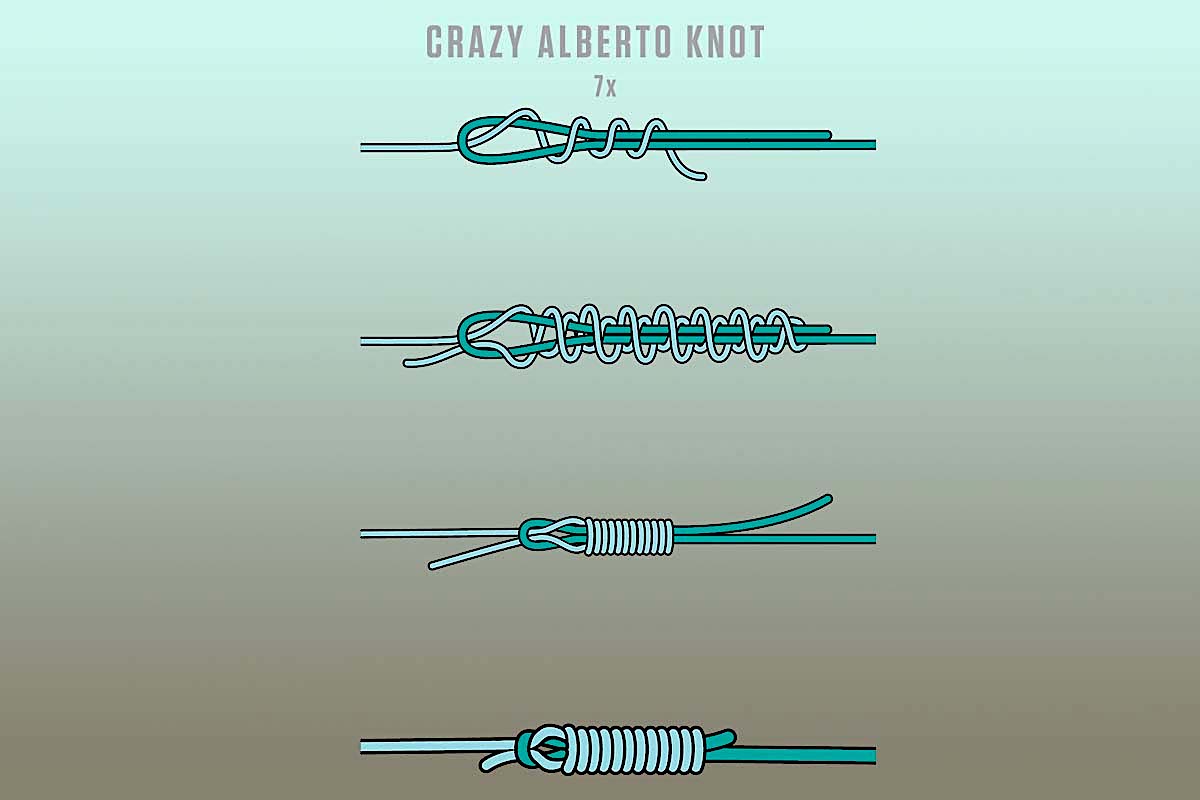
Knot 3 — Alberto Knot (braid To Leader)
The Alberto knot is designed for connecting braid to a thicker leader, such as fluorocarbon or monofilament. Many saltwater and bass anglers prefer the Alberto because it creates a small, strong knot that passes easily through guides.
How to tie an Alberto knot:
- Form a loop in the leader line.
- Pass about 10 inches of the braid through the loop.
- Wrap the braid around both strands of the leader 7–10 times going forward, then 7–10 times back toward the loop.
- Pass the tag end of the braid back through the loop (same direction as first entry).
- Wet and tighten by pulling on both lines.
Why it works: The wraps lock the braid tightly to the leader, creating high friction and a compact knot. The double direction of wraps adds extra security.
Non-obvious insight: For best results, always wrap the braid neatly side by side. Overlapping wraps can weaken the knot and make it more likely to catch on guides.
Knot 4 — Uni To Uni Knot
The Uni to Uni knot is closely related to the Double Uni, but is more about versatility. It’s excellent for connecting lines of similar or slightly different diameters and works well for braid, mono, or fluorocarbon.
How to tie a Uni to Uni knot:
- Overlap the ends of both lines.
- With the first line, form a loop and wrap the tag end around both lines 6–8 times (more wraps for braid).
- Pull to tighten the knot.
- Repeat with the second line.
- Pull both main lines to snug the knots together.
Why it works: The Uni to Uni is reliable because it creates two strong knots that pull against each other. With enough wraps, slippage is not an issue.
Non-obvious insight: Always trim tag ends closely. Long tag ends can catch debris or weeds, especially when casting in heavy cover.
Knot 5 — Loop-to-loop Connection
A loop-to-loop connection is less about a specific knot and more about a method. It’s often used by fly fishermen or anglers who want to quickly change leaders. You create a loop on the end of your braided line and another loop on your leader, then pass one loop through the other and pull the leader through.
How to tie a loop-to-loop connection:
- Tie a strong loop knot (like a double surgeon’s loop) in the end of your braided line.
- Tie a similar loop in your leader.
- Pass the leader loop through the main line loop.
- Pass the leader end through its own loop and pull tight.
Why it works: The loop-to-loop method allows for very fast leader changes. The double loops distribute pressure and prevent slippage.
Non-obvious insight: Use a slightly larger loop in the braid than in the leader. This makes it easier to connect and disconnect, and reduces stress on the knots during casting.

Credit: kastking.com
Quick Comparison Table
To help you pick the right knot for your setup, here’s a side-by-side look at the main features of each:
| Knot | Best For | Strength (%) | Difficulty | Slippage Risk |
|---|---|---|---|---|
| Palomar | Hooks/lures to braid | ~95–100 | Easy | Very Low |
| Double Uni | Braid to leader | ~90–95 | Moderate | Low |
| Alberto | Braid to thick leader | ~90–100 | Advanced | Very Low |
| Uni to Uni | General line joining | ~90–95 | Easy | Low |
| Loop-to-loop | Quick leader changes | ~85–90 | Easy | Medium |
Tips For Tying Knots With Braid
Tying knots in braided line is different from tying knots in mono or fluoro. Here are some important tips to help you get the most from your braid:
- Always add extra wraps. For most knots, add 2–3 more wraps than you would with mono. This gives the knot more grip and reduces slippage.
- Wet the knot before tightening. This reduces heat from friction and helps the knot cinch down smoothly without damaging the fibers.
- Use smooth, steady pressure. Jerking or snapping the knot tight can weaken the braid. Pull slowly and evenly.
- Check your knots often. Braided line can show damage at the knot after a few fish or snags. Retie if you see any fraying.
- Don’t use old, worn braid for knots. Braid weakens with UV exposure and heavy use. Always tie knots with fresh line when possible.
- Trim tag ends closely but not too short. Leave about 1/8 inch. Too short, and the knot may slip; too long, and it may catch in guides or weeds.
- Use a drop of super glue for security. If you’re targeting very large fish, a tiny drop of glue on the knot can add extra confidence. But don’t overdo it—too much glue can make the knot stiff and brittle.
- Practice at home. Braid can be hard to see, especially in low light. Practice your knots in good light before you hit the water.
Frequently Asked Questions
Which Knot Is The Absolute Best For Tying Braid To A Hook?
The Palomar knot is widely considered the best and most reliable knot for tying braid directly to a hook, lure, or swivel. It’s easy to learn, fast to tie, and keeps nearly 100% of your line’s strength.
Why Do Knots Sometimes Slip With Braided Line?
Knots slip on braid because the fibers are much smoother and slicker than monofilament. Without enough wraps or the right knot, the line can slide and loosen under pressure. That’s why you need knots designed for high friction and multiple wraps.
Can I Use Super Glue On My Braid Knots?
Yes, a small drop of super glue can help lock knots in place, especially for big game fishing. However, too much glue can make the knot stiff, which might cause it to break under sudden pressure. Only use a tiny drop if you’re concerned about slippage.
Is There A Knot That Works For Both Braid And Mono?
The Uni to Uni knot (or Double Uni) is a great all-purpose knot that works for both braid and mono. Just remember to use more wraps with the braid side to account for its slippery texture.
How Often Should I Retie Knots With Braided Line?
Check your knots every time you catch a fish, snag, or notice any fraying. Braided line is more sensitive to abrasion at the knot, so frequent retying helps prevent unexpected failures.
Final Thoughts
Choosing the best fishing knot for braided line is not just about strength—it’s about reliability, ease of tying, and how well the knot fits your fishing style. The Palomar knot is the top choice for most anglers, but knots like the Double Uni, Alberto, and loop-to-loop each have their place. Practice these knots at home, add extra wraps, and check your line often. With the right knot, you’ll get the most out of your braid and enjoy more time fighting fish instead of fixing tackle. For a deeper dive into advanced knot techniques and more fishing tips, visit the Animated Knots website. Happy fishing!
Credit: www.gameandfishmag.com

Tony L. Smith is a dedicated fishing expert with over 15 years of hands-on experience in freshwater and saltwater environments. As the founder of FishingStaff, Tony is committed to demystifying fishing gear for beginners and budget-conscious anglers who refuse to compromise on quality. Learn more about Tony & find him on Twitter. Happy reading!