Most people imagine ice fishing as a peaceful day on a frozen lake, dropping a line, and pulling up fish with ease. The reality is often very different—especially for beginners. Many new anglers spend hours in the cold and go home empty-handed, confused about what went wrong. The main reason is simple: ice fishing requires more planning, precise techniques, and local knowledge than most expect. Without the right approach, you could be sitting over empty water, using the wrong bait, or missing the bite because your hands are freezing. But with the right tips, you can turn your next trip into a successful and enjoyable experience.
Location Tips (find The Fish First)
Success in ice fishing starts with being in the right place. Fish are not everywhere under the ice, so finding their location is the first step.
Learn The Lake Before You Go
Before heading out, study the lake you plan to fish. Look for lake maps that show water depth and structure. Fish often gather in areas with changes in depth, underwater humps, or near drop-offs. Local bait shops and fishing forums can also share where people are catching fish.
Use Technology To Your Advantage
A fish finder or sonar device can show you where fish are hiding under the ice. Even a simple portable unit can reveal depth changes and fish movement. Mark these spots to drill holes.
Drill Multiple Holes
Don’t settle for the first hole. Drill several holes in different locations and depths. Spend 10–15 minutes at each. If you don’t see fish on your sonar or feel bites, move to another spot. This method, called “hole hopping,” is one of the fastest ways to locate active fish.
Focus On Structure And Cover
Fish like to stay near underwater objects such as rocks, weed beds, or sunken trees. These areas offer food and protection. If you can find such spots, your chances improve.
Pay Attention To Time And Weather
Fish often bite best early in the morning or late afternoon. On cloudy days, fish may roam more, while on bright days, they often stay deeper or closer to cover. Temperature swings can also change where fish hide.
Non-obvious tip: Don’t ignore shallow areas, especially at first or last ice. Many species, like perch and bluegill, move shallow to feed when the ice is thin and oxygen is high.
Gear & Setup Tips
Choosing the right equipment makes your trip more productive and keeps you comfortable in harsh conditions.
Choose The Right Rod And Reel
Ice fishing rods are much shorter than summer rods, usually 24–36 inches. This makes them easier to handle in tight spaces. Match your rod to the fish you target: use light or ultralight rods for panfish, and medium rods for walleye or pike. Pair with a small spinning reel and spool with 2–8 lb test line, depending on species.
Keep Your Gear Organized
A good ice fishing sled lets you carry your auger, rods, tackle, and heater easily. Using small tackle boxes prevents tangling and makes finding things easier, especially with gloves on.
Pick The Right Auger
There are three main types: hand, gas, and battery-powered augers. Hand augers are light and quiet but hard to use on thick ice. Gas and electric augers cut faster but are heavier. For most beginners, a 6–8 inch hand auger is enough for panfish and small walleye.
Dress For The Cold
Layering is key. Start with thermal underwear, add an insulating layer, and finish with a windproof, waterproof outer shell. Insulated boots, gloves, and a warm hat prevent frostbite. Avoid cotton, which stays wet and makes you cold.
Shelter And Heating
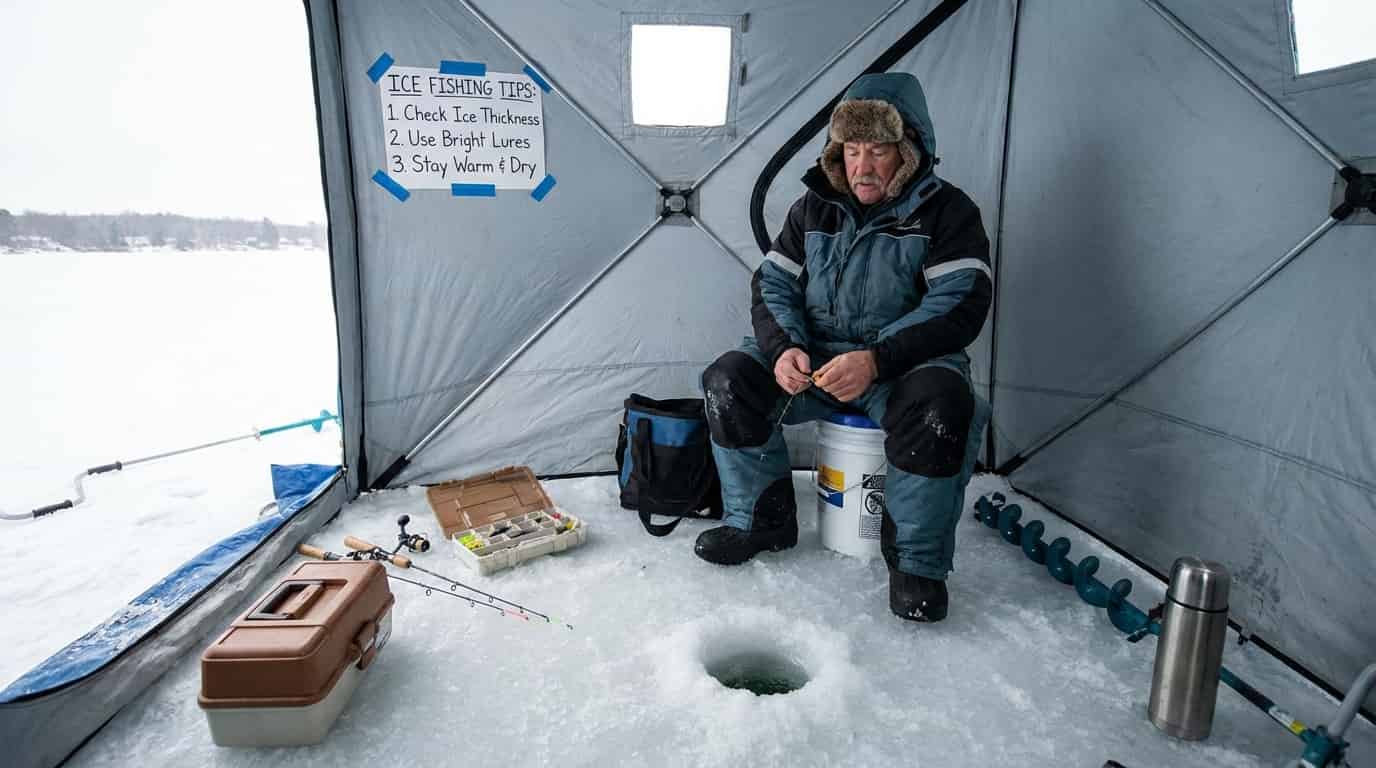
A portable ice shelter can block wind and make a big difference in comfort. Many models pop up quickly and seat two or more people. Consider a small propane heater for extra warmth, but always ensure good ventilation to avoid carbon monoxide.
Use A Bucket Or Chair
Sitting on the ice gets cold quickly. Bring a sturdy bucket (which can also hold your gear) or a folding chair for comfort.
Non-obvious tip: Bring extra dry gloves and socks. Wet hands and feet are a leading cause of discomfort and early quitting.

Credit: www.acmetackle.com
Bait And Lure Tips
What you put on your hook matters. Fish can be picky, especially in winter.
Match The Bait To The Fish
- Panfish (bluegill, perch, crappie): Try waxworms, spikes (maggots), or small soft plastics on a tiny jig.
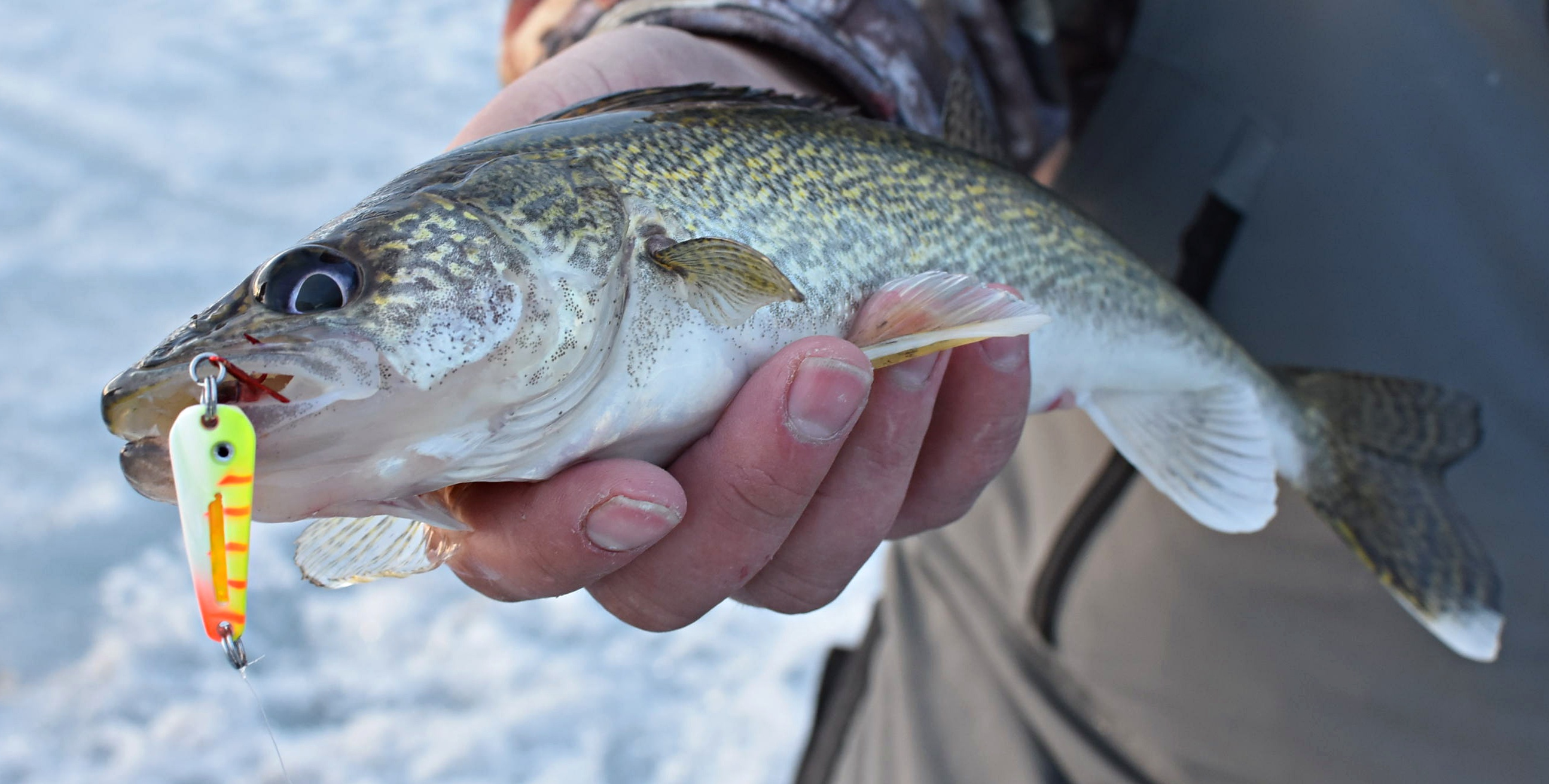
- Walleye: Use fathead minnows, shiners, or jigging spoons tipped with minnow heads.
- Northern pike: Large shiners or suckers work well on tip-ups.
Use Smaller Sizes
In winter, fish are less active and often prefer smaller meals. Choose small jigs and spoons (1/16 to 1/8 ounce) and tiny hooks. Downsizing increases your chances of bites.
Experiment With Colors
Start with natural colors like white, silver, or gold. On cloudy days, try brighter colors (chartreuse, orange, pink) to attract attention. Some days, a color change is all it takes.
Live Bait Vs. Artificial
Live bait usually works best for beginners. It moves naturally and gives off scent. However, some artificial lures, like soft plastics or scented baits, can outfish live bait on certain days.
Scent Matters
Adding extra scent—commercial fish attractants or even a piece of worm—can help when fish are slow to bite. Rub scent on your lure or add a small piece of bait.
Change Often
If you’re not getting bites, switch your bait or lure style every 15–20 minutes. Sometimes a tiny change makes a big difference.
Non-obvious tip: Keep bait lively in cold weather by storing it inside your jacket or using an insulated bait bucket.
Technique Tips (jigging, Tip-ups)
How you present your bait is as important as what you use.
Jigging Basics
Jigging means lifting and dropping your lure to attract fish. Start with slow, gentle movements—lift the rod tip a few inches, pause, and lower it. Watch your line for any sign of a bite, as fish often hit during the pause.
Mix Up Your Motion
If slow jigging doesn’t work, try faster movements or tiny twitches. Sometimes “deadsticking” (leaving the bait still) is the secret. Fish react to different actions on different days.
Tip-ups For Big Fish
A tip-up is a device that holds your baited line and signals when you have a bite, usually with a flag. Set tip-ups with live bait for species like pike or walleye, then watch for flags to pop.
Use Multiple Lines
If legal in your area, use both a jigging rod and a tip-up at the same time. This covers more water and targets different fish behaviors.
Watch For Subtle Bites
Fish are often less aggressive in winter. Instead of hard strikes, you might only see your line move or feel a small tap. Set the hook quickly but gently to avoid tearing the hook out.
Adjust Depth Often
If you’re not getting bites, change your lure depth. Many fish suspend at a certain level in the water column, especially on cloudy days or in deeper lakes.
Non-obvious tip: Use a spring bobber (a sensitive tip on your rod) for panfish. It shows even the lightest bites.

Credit: onthewater.com
Safety And Comfort Tips
Ice fishing can be dangerous if you ignore safety. Staying comfortable is also key to enjoying your day.
Check Ice Thickness
Never fish on less than 4 inches (10 cm) of clear, solid ice. Double that if using a snowmobile or ATV. Avoid areas with moving water, springs, or pressure ridges—they often have thin ice.
Here’s a simple ice thickness guide:
| Ice Thickness | Safe For |
|---|---|
| 2 inches (5 cm) | Unsafe for any activity |
| 4 inches (10 cm) | Walking and fishing |
| 5–7 inches (13–18 cm) | Snowmobiles, ATVs |
| 8–12 inches (20–30 cm) | Cars, light trucks |
| 12+ inches (30+ cm) | Medium trucks |
Bring Safety Gear
Always wear a life vest or float suit, especially early and late in the season. Carry ice picks (for self-rescue), a rope, and a whistle. Tell someone your plans and never fish alone if possible.
Stay Dry
Wet clothes quickly lead to hypothermia. Use waterproof boots and gloves. Keep spare clothes in a dry bag.
Eat And Drink
Cold weather burns more calories. Bring high-energy snacks and a thermos of warm drink. Avoid alcohol, which increases heat loss and impairs judgment.
Watch The Weather
Sudden snow or wind can make it hard to find your way back. Use a GPS or mark your path. Leave the ice if you hear cracking, feel water on top, or see changing ice color.
Know Your Limits
If you start to shiver uncontrollably or feel confused, get warm immediately. These are early signs of hypothermia.
Non-obvious tip: Sunglasses and sunscreen are important. Sunlight reflecting off snow and ice can cause eye and skin damage, even on cloudy days.
Bonus: Pro Tips From Experienced Ice Anglers
What separates experts from beginners? Sometimes it’s the small things that make a big difference.
Be Quiet And Move Carefully
Fish can sense noise and vibration through the ice. Walk softly and avoid dropping gear. In shallow water, even talking loudly can spook fish.
Keep Holes Ice-free
Ice can build up quickly around your holes, especially in windy conditions. Skim ice regularly with a slush scoop. Some anglers use a small dipper of hot water to keep holes open.
Use Light Line And Fluorocarbon
Fluorocarbon fishing line is nearly invisible underwater and helps get more bites, especially in clear water. Use the lightest line you can, but not so light that it breaks easily.
Watch The Barometer
Many ice anglers notice better fishing when the barometric pressure is steady or falling. After a storm, when pressure rises, fish often get less active.
Track Your Success
Keep a small notebook to record where and when you catch fish, weather conditions, bait used, and other details. Patterns will emerge over time, helping you repeat success.
Learn From Others
Don’t be afraid to ask local anglers for advice. Most are happy to share tips with newcomers. Watching how experienced fishers set up and move can teach you more than any book.
Try Night Fishing
Some species, like walleye, are more active after dark. Use a lantern or headlamp, and glow-in-the-dark lures to increase your chances.
Compare Popular Ice Fishing Shelters
Here’s a look at three common types:
| Type | Capacity | Setup Time | Portability |
|---|---|---|---|
| Flip-Over | 1–2 | Very Fast | High |
| Pop-Up Hub | 2–6 | 5–10 min | Moderate |
| Permanents/Shacks | Varies | Permanent | Low |
Non-obvious tip: Use a small piece of foil or a bright sticker at the bottom of your hole. This reflects light and can attract fish, especially in deeper or stained water.
After learning from your mistakes and paying attention to details, you’ll find that ice fishing becomes more fun—and more successful—each trip.
Credit: www.northlandtackle.com
Frequently Asked Questions
How Thick Should Ice Be For Safe Ice Fishing?
For walking and fishing, ice should be at least 4 inches (10 cm) thick. Use extra caution in areas with moving water, near inlets/outlets, or if the ice looks cloudy.
What Is The Best Time Of Day To Go Ice Fishing?
Early morning and late afternoon are often best. Fish feed more actively during these times. On cloudy days, fish may bite throughout the day.
Do I Need A Special License For Ice Fishing?
In most places, a regular fishing license is required for ice fishing. Some areas have extra rules, such as limits on the number of lines or holes. Always check local regulations before you go.
Can I Ice Fish Without A Shelter?
Yes, you can fish without a shelter, especially on mild days. However, a portable shelter improves comfort and helps you stay longer, which usually means more fish.
What Is A Tip-up And How Do I Use It?
A tip-up is a device that holds a baited line through the ice. When a fish bites, a flag pops up to signal you. Set tip-ups with live bait for pike or walleye, and check them often.
Ice fishing takes patience, preparation, and a bit of local knowledge. By using these tips, you’ll avoid common beginner mistakes and enjoy more success on the ice. For even more guidance, visit the Minnesota DNR Ice Fishing Guide—a trusted resource for new and experienced anglers alike. Stay safe, stay warm, and good luck on your next trip!
Tony L. Smith is a dedicated fishing expert with over 15 years of hands-on experience in freshwater and saltwater environments. As the founder of FishingStaff, Tony is committed to demystifying fishing gear for beginners and budget-conscious anglers who refuse to compromise on quality. Learn more about Tony & find him on Twitter. Happy reading!