
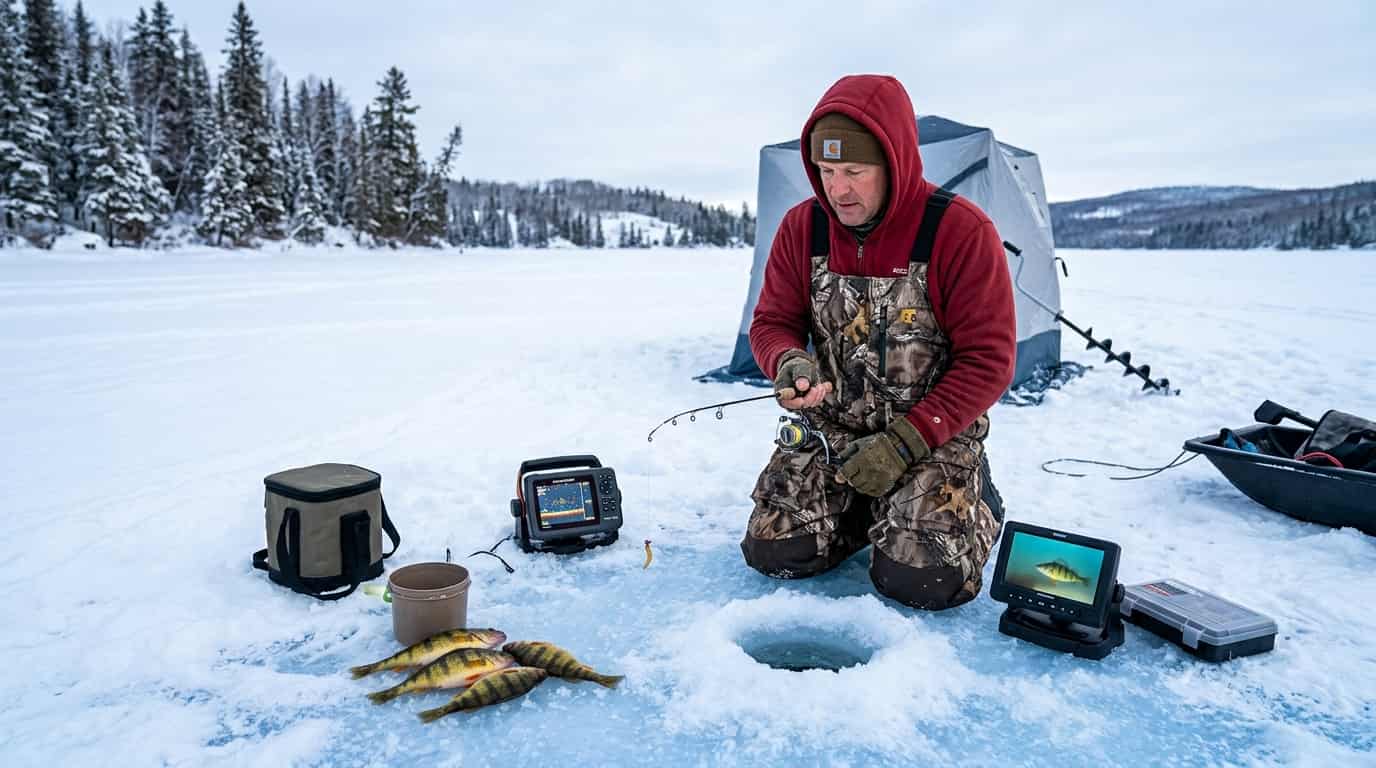
Ice fishing is a winter adventure that brings anglers out onto frozen lakes across the United States. Among all the fish you can catch under the ice, perch are one of the most popular targets. These fish are easy to find, fun to catch, and offer delicious meals. But there’s much more to ice fishing for perch than dropping a line and hoping for the best. Perch are schooling fish, so once you locate them, you can enjoy fast action. They are also known for their willingness to bite even in cold water. If you’re looking for a target that’s both rewarding and accessible, yellow perch ice fishing is the perfect choice. Let’s dive into where to find perch, what gear to use, and how to catch them consistently.
Where To Find Perch Under The Ice
Perch are often found in groups, making them ideal for ice fishing. But their exact location changes throughout the winter. Early in the season, perch stay closer to shore in shallow water, often around weed beds and submerged structures. As winter progresses and the ice thickens, they move deeper.
Most perch prefer depths between 15 and 30 feet once midwinter arrives. They feed on small insects, crustaceans, and tiny fish, so you’ll often find them where baitfish gather. Look for spots with underwater features, like drop-offs, humps, or the edge of a weed line. These areas attract both perch and their prey.
If you’re fishing a new lake, start by drilling several holes in a grid pattern to cover different depths and structures. Use a fish finder or sonar to spot schooling perch. Pay attention to the bottom—perch often hug the lake floor, especially during midday. In the early morning and late afternoon, they may rise a bit higher in the water column.
It’s easy to miss schools if you focus only on one spot. Move around until you find consistent action. If you catch a perch, there are likely more nearby. One overlooked tip: perch often return to the same spots year after year, so keeping notes about successful locations can help in future seasons.
Best Gear Setup For Perch Ice Fishing
You don’t need heavy gear to catch perch. In fact, light tackle is better because perch have soft mouths and can be sensitive to resistance. A balanced setup makes it easier to detect bites and avoid losing fish.
| Gear | Recommended Option | Why It Works |
|---|---|---|
| Rod | 24–28” ultralight or light rod | Sensitive tip for detecting subtle bites |
| Reel | Small spinning reel | Smooth drag, easy handling |
| Line | 2–6 lb test mono or fluorocarbon | Low visibility, enough strength for perch |
| Ice fishing perch rig | Simple jig or drop-shot rig | Effective presentation, minimal resistance |
Tungsten jigs are popular for perch because they sink fast and stay vertical, making them perfect for deep water. A Swedish pimple is another favorite, especially when perch are feeding aggressively. You can pair these lures with live bait or plastic trailers.
Some anglers use tip-ups, but for perch, a jigging rod is usually more effective. Tip-ups work if you want to fish multiple holes, but they don’t allow for the active jigging that often triggers bites. Always carry extra jigs and hooks—perch can be picky, and changing your presentation quickly makes a difference.
Best Lures And Bait For Perch
The right lure or bait is crucial for perch ice fishing. Perch are opportunistic feeders, but their preferences change with conditions. Here’s a quick guide to what works best:
- Tungsten jig with a plastic tail: Tungsten sinks quickly and lets you feel every movement. Add a small plastic, like a wax worm imitation, for extra action.
- Swedish pimple: This classic spoon is flashy and effective. Perch respond well to its fluttering movement. Tip it with a piece of live bait for more appeal.
- Live bait: Minnows, wax worms, and spikes (maggots) are top choices. Hook a minnow through the lips for natural movement, or use wax worms on a small hook or jig.
- Drop-shot rig with a soft plastic: This setup keeps your bait just off the bottom, where perch often feed. Use a slender plastic worm or grub.
Perch love small baits. Avoid oversized lures—anything bigger than 1. 5 inches is usually too much. Change colors if the bite slows down. Bright colors like chartreuse, orange, and pink often work well, but natural shades can be better in clear water.
| Lure/Bait | Best Use | Tips |
|---|---|---|
| Tungsten jig | Deep water, active perch | Pair with wax worms or spikes |
| Swedish pimple | Attracting schools | Tip with minnow pieces |
| Live minnows | Cold fronts, finicky fish | Hook through lips for action |
| Soft plastics | Clear water, pressured fish | Try subtle colors |
One insight many beginners miss: Perch sometimes prefer bait sitting still, especially during cold snaps. If jigging doesn’t work, try letting your bait rest on the bottom for a few seconds between movements.
Jigging Techniques That Work For Perch
Jigging for perch is more than just moving your rod up and down. The right technique can turn slow days into productive ones. Start with short, gentle lifts—raise the rod tip 1–3 inches, then let it fall. Perch are attracted to movement, but too much action can scare them.
Try varying your jigging style. If you’re not getting bites, switch to subtle shakes or even hold the bait still. When a perch bites, set the hook quickly but gently—too much force can tear the hook out.
Some advanced tips:
- Pause often: Perch sometimes strike when the lure stops moving.
- Use a cadence: Repeat the same jigging pattern to attract schooling perch.
- Watch your sonar: If you see fish rise to your bait but don’t bite, try downsizing your lure or switching colors.
A unique tactic is the “lift-drop” method. Lift your jig slowly and let it drop back down, letting it rest on the bottom for a moment. This mimics small prey. If you see perch on your sonar but they’re hesitant, try the “deadstick”—leave your bait motionless for a minute.
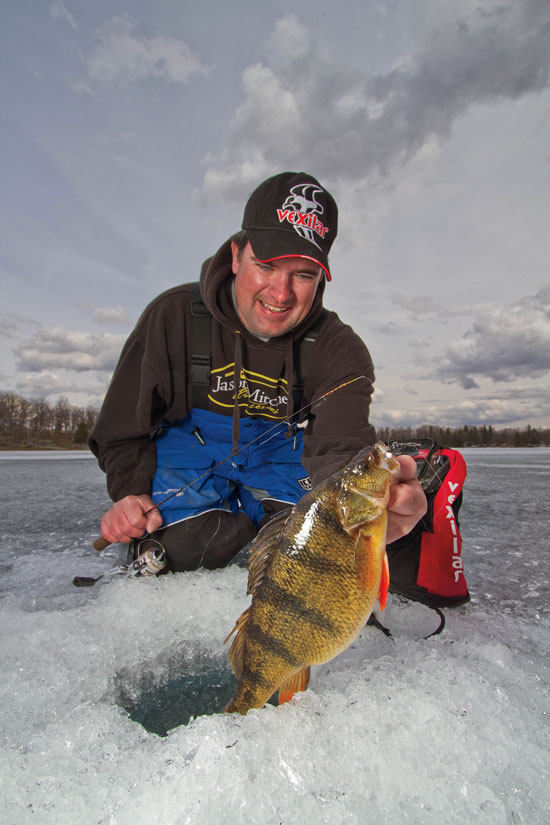
Credit: www.in-fisherman.com
Best States And Lakes For Perch Ice Fishing
Perch are widespread, but some states and lakes are famous for their yellow perch ice fishing. Here are top spots in the U.S. where you can find quality perch action:
| State | Popular Lake | Why It’s Great |
|---|---|---|
| Michigan | Saginaw Bay | Large perch, easy access |
| Minnesota | Lake Mille Lacs | Consistent schools, deep water |
| Wisconsin | Lake Winnebago | High catch rates, family friendly |
| New York | Oneida Lake | Big perch, long ice season |
| North Dakota | Devils Lake | Excellent winter perch fishery |
These lakes are known for both numbers and size. Perch in these waters often reach 12 inches or more. You can also find perch in smaller local lakes. Many state wildlife agencies post reports about perch populations, so check those before planning your trip.
One non-obvious tip: In some lakes, perch bite better during cloudy days. Sunlight can scatter schools, so fishing during low-light conditions often improves your chances.
How To Stay On A School Of Perch
Perch move throughout the day, and their schools can shift quickly. Staying with them is key to steady action. Here’s how to keep catching:
- Drill multiple holes: Don’t rely on just one spot. Move if the bite slows.
- Use sonar or fish finder: Track perch as they move. Modern electronics help you see both fish and your lure.
- Fish with friends: Spread out across the ice. When someone finds a school, everyone can move and benefit.
- Change depths: If perch disappear, try shallower or deeper water. Schools may move up and down as light and feeding patterns change.
- Keep bait in the strike zone: Perch often feed just off the bottom. If you’re too high or low, you’ll miss bites.
Experienced anglers often notice that perch will sometimes “ghost” away after a few fish are caught. To keep them nearby, use small baits and avoid loud noises on the ice. If you lose the school, move quickly—perch don’t stay in one place for long.

Credit: coloradooutdoorsmag.com
Cleaning And Cooking Perch
Once you’ve caught a bucket of perch, you’ll want to prepare them for eating. Perch are known for their white, flaky meat and mild flavor. Cleaning perch is simple but requires care.
How to clean perch:
- Lay the fish flat and cut behind the gills down to the backbone.
- Run the knife along the backbone to remove the fillet.
- Remove the skin by placing the fillet skin-side down and sliding the knife between flesh and skin.
- Rinse fillets in cold water.
Perch have few bones, making filleting easier than many other fish. Some anglers prefer to scale and gut smaller perch and fry them whole.
Cooking methods:
- Pan-frying: Coat fillets with flour or breadcrumbs and cook in hot oil until golden.
- Baking: Place fillets in a baking dish, add seasoning, and bake at 350°F for 15–20 minutes.
- Grilling: Brush fillets with oil and grill for 2–3 minutes per side.
Perch are excellent for fish tacos, sandwiches, or just served with lemon and herbs. One overlooked tip: Perch fillets freeze well, so you can enjoy your catch even months after the season.
If you’re looking for more fish recipes, the U.S. Fish & Wildlife Service offers safe cooking guidelines and ideas.
Frequently Asked Questions
How Deep Should I Fish For Perch In Winter?
Perch usually stay in 15–30 feet of water during winter. Early in the season, they might be shallower, around weeds. As winter progresses, focus on deeper spots near drop-offs or structure. Always use your sonar to check if the fish are hugging the bottom or suspended.
What’s The Best Ice Fishing Perch Rig?
A tungsten jig tipped with a wax worm or minnow is the top choice. If fish are picky, try a drop-shot rig with a small plastic bait. Keep your setup simple—light line and sensitive rods help detect bites.
How Do I Know If I’ve Found A School Of Perch?
If you catch one perch, there are often more nearby. Watch your fish finder for groups of fish close together. Perch schools can move quickly, so drill extra holes and move around if bites slow down.
What Are Common Mistakes In Perch Ice Fishing?
Many anglers use oversized lures or heavy line, which scares perch. Also, staying in one spot too long can mean missing schools. Change locations, lures, and jigging styles if you aren’t catching fish.
Are Perch Safe To Eat?
Yes, perch are safe and delicious to eat. Their meat is mild and flaky. Always clean fish quickly and keep fillets cold. Check local advisories about water quality before eating your catch.
Ice fishing for perch is more than just a winter pastime—it’s a tradition for many families, offering both excitement and tasty rewards. With the right gear, lures, and techniques, you can enjoy steady action and fill your bucket with these schooling fish.
Remember to move often, keep your setup light, and pay attention to details like depth and bait choice. Whether you’re a beginner or a seasoned angler, perch ice fishing offers something special every time you venture onto the ice.
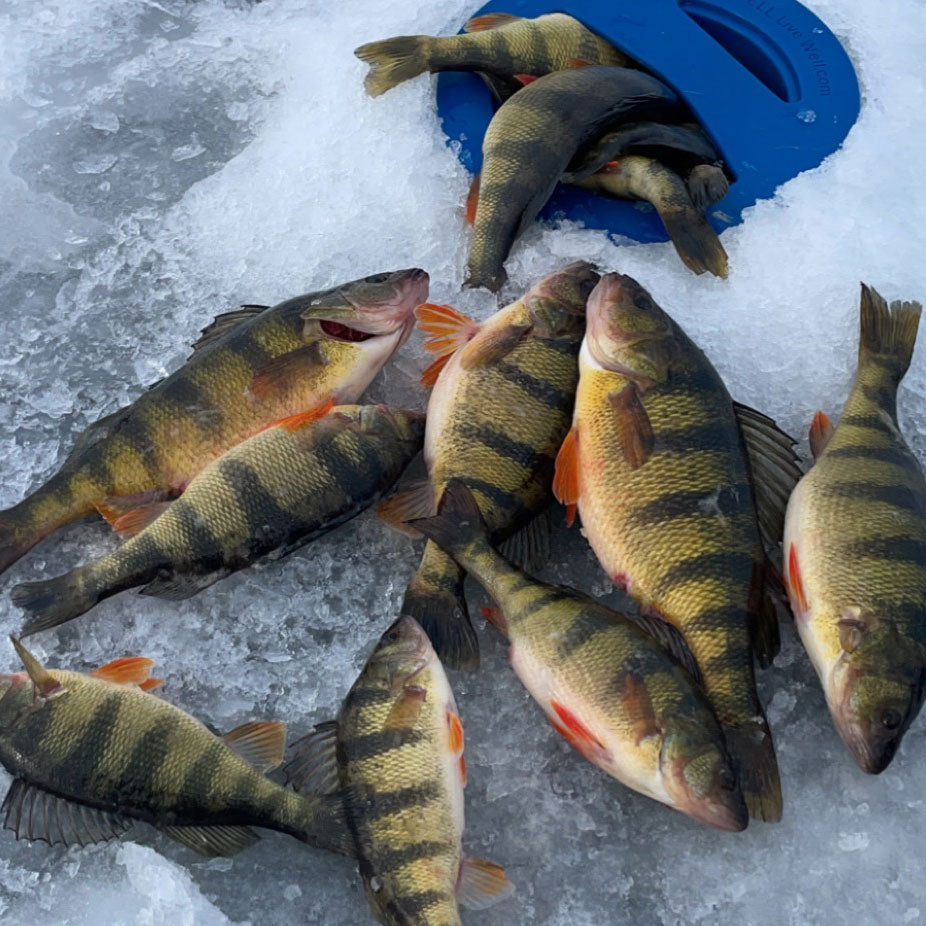
Credit: seaguar.com

Tony L. Smith is a dedicated fishing expert with over 15 years of hands-on experience in freshwater and saltwater environments. As the founder of FishingStaff, Tony is committed to demystifying fishing gear for beginners and budget-conscious anglers who refuse to compromise on quality. Learn more about Tony & find him on Twitter. Happy reading!