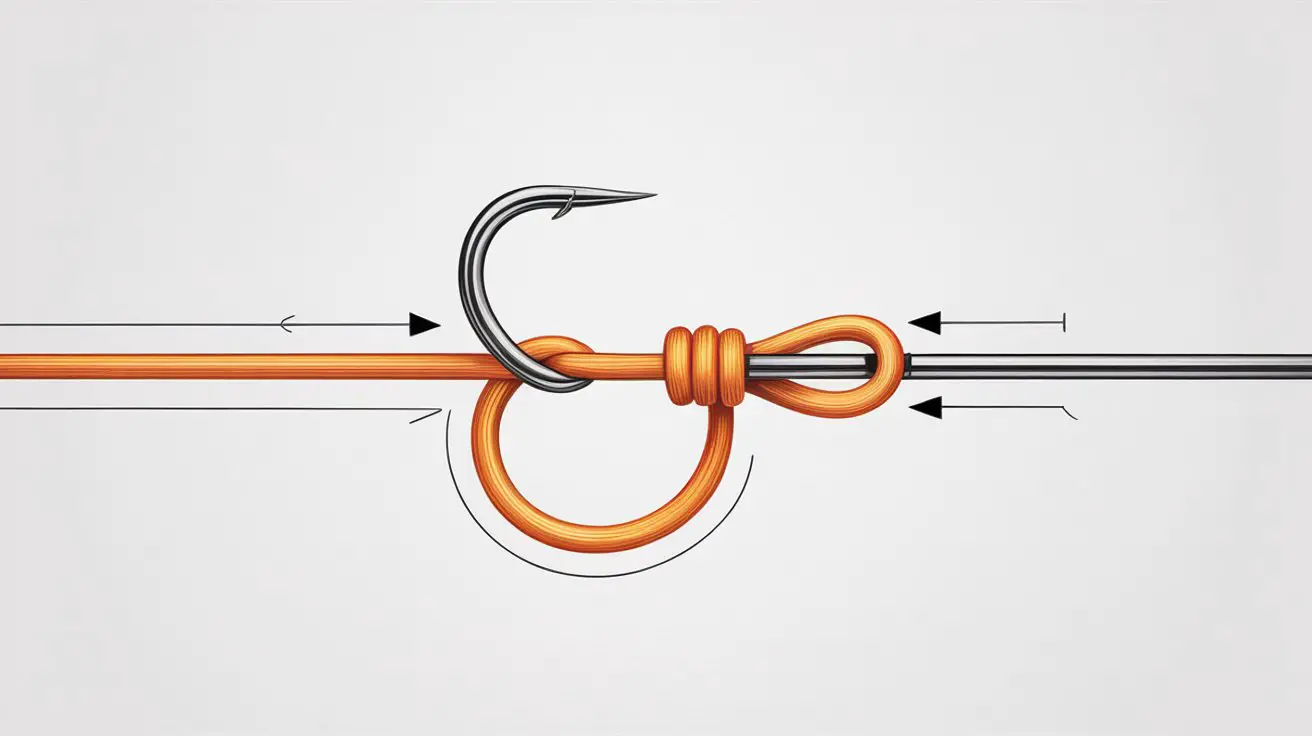
The uni knot is one of the most important fishing knots you can learn. It’s strong, reliable, and easy to tie—even with cold, wet hands. Whether you’re a beginner or a pro, mastering the uni knot will help you catch more fish and avoid losing tackle. Many anglers use it for tying hooks, joining lines, and attaching lures or swivels. Unlike some knots, the uni knot works well with both monofilament and braided lines. Its versatility makes it a favorite for many situations on the water.
Step-by-step Tying Instructions (with Images)
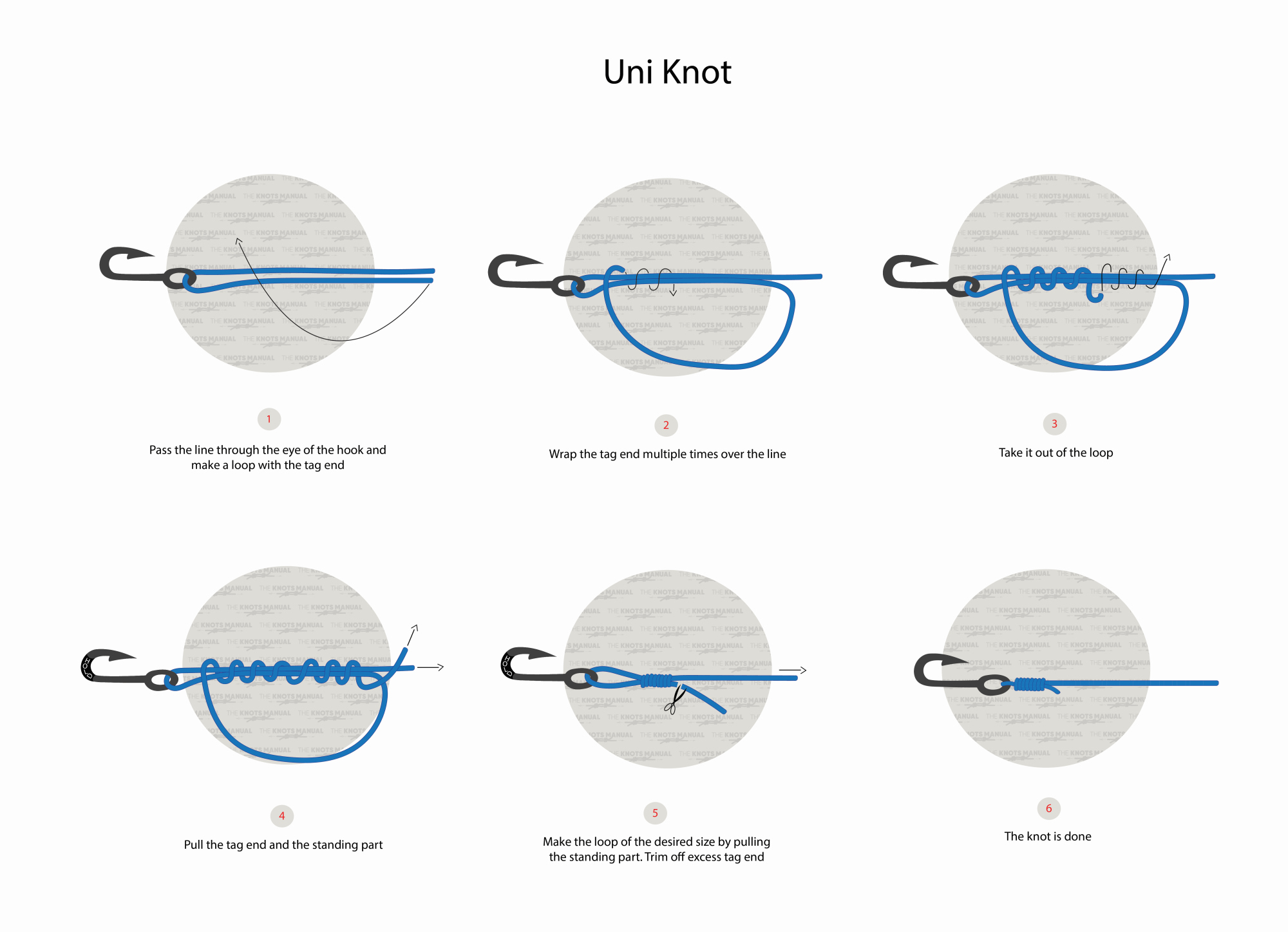
Learning how to tie a uni knot is simple. Follow these uni knot instructions step by step for a secure connection.
- Thread the line through the eye of your hook, lure, or swivel. Leave about 6 inches of tag end.
- Create a loop by doubling back the tag end, laying it beside the standing line.
- Wrap the tag end around both lines and through the loop. Do this 4-6 wraps for most lines.
- Moisten the knot with water or saliva to reduce friction.
- Pull the tag end slowly to tighten the wraps.
- Slide the knot down to the eye by pulling on the standing line.
- Trim the excess tag end close to the knot.
Here’s a simple diagram showing the process:

These steps work for hooks, lures, and swivels. If you use thick line, try fewer wraps. For thin or braided line, use more wraps for extra strength.
Uni Knot For Attaching A Hook Or Lure
The uni knot is perfect for tying your fishing line to a hook or lure. It’s strong enough for big fish and easy to tie even when your hands are cold or the boat is rocking. Unlike the Grinner knot, the uni knot is less likely to slip and works well with different line types.
Here are a few tips for a secure connection:
- Use 4-6 wraps for most monofilament lines.
- Tighten the knot slowly, making sure the wraps are neat.
- Always wet the knot before tightening to avoid damaging the line.
If you’re fishing for bass or trout, the uni knot is a great choice. It allows for a small loop size at the eye, which can help the lure move naturally. This flexibility is why many anglers prefer it over other knots.
Credit: www.bloffique-theatre.com
Uni Knot For Joining Two Lines (double Uni)
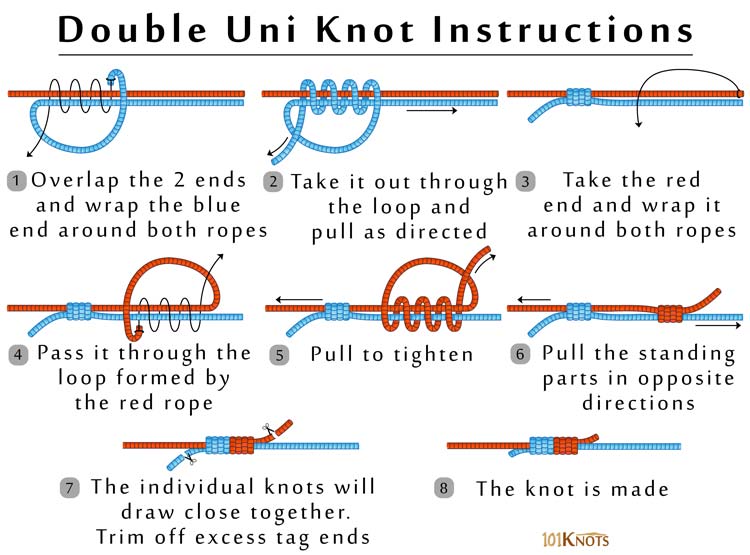
When you need to connect two fishing lines, the double uni knot is your best option. This knot, sometimes called uni to uni, is strong and reliable for joining lines of similar or different sizes.
Follow these steps:
- Overlap the lines you want to join by about 6 inches.
- Tie a uni knot with the first line around the second.
- Tie another uni knot with the second line around the first.
- Moisten both knots and pull the tag ends to tighten.
- Pull the standing lines to slide the knots together.
This method works well for leaders, backing, or when switching between mono and braid. The double uni knot is easier to tie than the blood knot and is less bulky than other joining knots.
Here’s a quick comparison between double uni and other joining knots:
| Knot | Strength (%) | Ease of Tying | Bulk |
|---|---|---|---|
| Double Uni | 85-90 | Easy | Low |
| Blood Knot | 80-85 | Medium | Medium |
| Surgeon’s Knot | 75-80 | Easy | High |
Uni Knot With Braided Line
Braided fishing line is slippery, so tying the right knot is important. The uni knot works well, but you need to use extra wraps for security.
Tips for tying with braid:
- Use 6-8 wraps instead of 4-6.
- Wet the knot before tightening.
- Pull slowly to avoid overheating the line.
Many anglers use the uni knot for braid because it doesn’t weaken the line as much as other knots. If you’re attaching braid to a leader, the double uni knot is also a good choice.
Here’s a comparison of wraps for different line types:
| Line Type | Recommended Wraps | Security |
|---|---|---|
| Monofilament | 4-6 | High |
| Braid | 6-8 | Very High |
| Fluorocarbon | 5-7 | High |

Credit: hookeze.com
How Many Wraps For The Uni Knot?
The number of wraps is important for knot strength. Too few wraps and the knot may slip; too many and it can become bulky. The right number depends on your line type and thickness.
- For mono: 4-6 wraps
- For braid: 6-8 wraps
- For fluorocarbon: 5-7 wraps
A non-obvious insight: For ultra-thin lines, more wraps (up to 10) may help, but always test the knot before fishing. Many beginners forget to wet the knot, which can cause friction and weaken the line.
Uni Knot Vs Palomar Knot — When To Use Each
Both the uni knot and Palomar knot are popular, but they have different strengths. The uni knot is more versatile, while the Palomar knot is best for quick, strong connections.
Here’s a quick comparison:
| Knot | Best Use | Strength | Line Types |
|---|---|---|---|
| Uni Knot | Hooks, lures, joining lines | 85-90% | Mono, braid, fluoro |
| Palomar Knot | Hooks, lures | 95% | Mono, braid |
Use the uni knot when you need flexibility, such as tying leaders or joining lines. Use the Palomar knot for speed and raw strength, especially when using thick mono or braid.
Credit: www.101knots.com
Frequently Asked Questions
How Strong Is The Uni Knot?
The uni knot holds about 85-90% of the line’s breaking strength. It’s strong enough for most fishing situations, including big game fish.
Can I Use The Uni Knot For All Line Types?
Yes, the uni knot works with monofilament, braided, and fluorocarbon lines. Adjust the number of wraps for each type for best results.
What’s The Difference Between Uni And Grinner Knot?
The Grinner knot is similar to the uni knot but is mostly used in Europe. Both are reliable, but the uni knot is more common in the US and easier to tie with cold hands.
Is The Uni Knot Good For Tying Swivels?
Absolutely. The uni knot is ideal for line to swivel connections. It keeps the swivel secure and reduces the chance of line breakage.
How Do I Know If My Uni Knot Is Tied Correctly?
The wraps should be tight and neat, and the knot should slide smoothly to the eye. Always test the knot by pulling hard before fishing.
Mastering the uni knot will help you handle almost any fishing situation. It’s easy, strong, and works with different lines and tackle. For more expert advice and knot tutorials, check out the Animated Knots Uni Knot page. With practice, you’ll tie this knot quickly and confidently every time you fish.
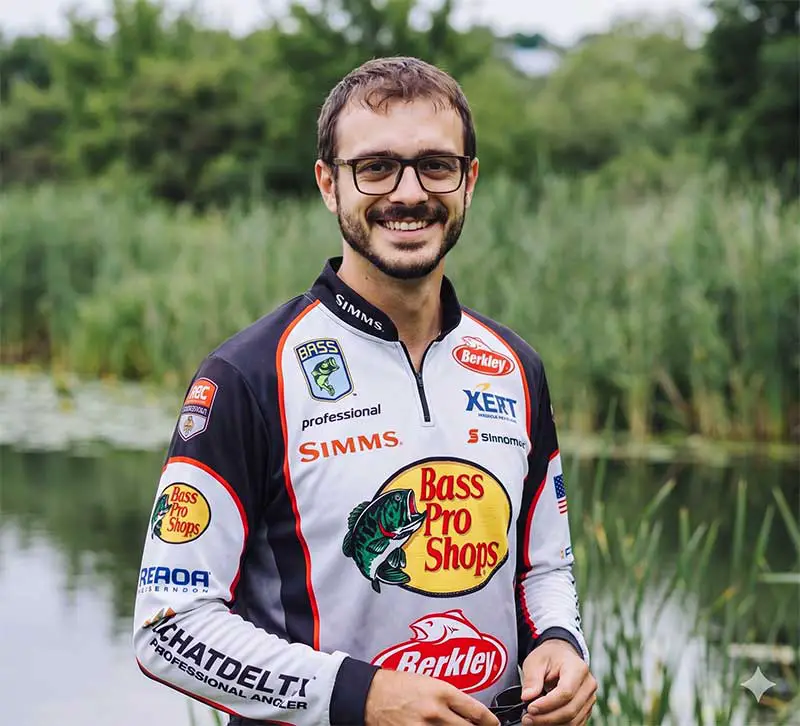
Tony L. Smith is a dedicated fishing expert with over 15 years of hands-on experience in freshwater and saltwater environments. As the founder of FishingStaff, Tony is committed to demystifying fishing gear for beginners and budget-conscious anglers who refuse to compromise on quality. Learn more about Tony & find him on Twitter. Happy reading!